Klarna Just Shipped a Shopping App Inside ChatGPT
- Author
- By Dor
- Publication date
- Published
- Reading time
- 7 min read
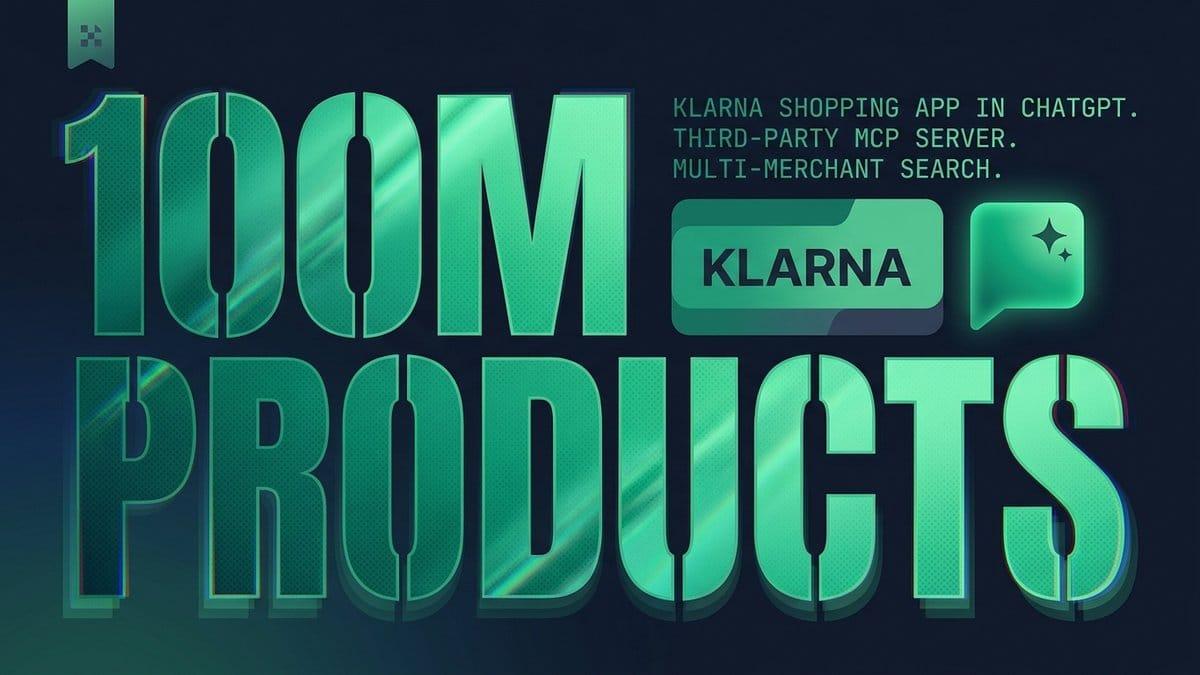
At 7:30 AM EDT today, Klarna launched the Klarna Shopping Search app inside ChatGPT. Live prices, multi-merchant aggregation, 100 million products, 13 markets. Same morning, Google flipped the switch on Universal Cart at I/O. The map of agentic shopping surfaces just changed shape.
TL;DR: ChatGPT is no longer one shopping surface. It is becoming a platform that hosts third-party commerce apps, the first of which is Klarna's. The same morning, Google launched Universal Cart across Search, Gemini, YouTube, and Gmail with eight named partners. Mid-market brands now have to plan for visibility inside sub-surfaces of ChatGPT, not just ChatGPT itself. The wedge is product data that reads cleanly across all of them.
What Klarna actually shipped
The Klarna Shopping Search app lets a ChatGPT user describe what they want in natural language, then returns visual product results with current prices, availability, and offers from multiple merchants. Klarna redirects the shopper to the merchant's site for the purchase. The app is powered by Klarna's Product Search MCP server, which exposes more than 100 million products and 400 million merchant listings across 13 markets.
That MCP detail matters more than the consumer pitch. Klarna built its commerce inventory into a Model Context Protocol server, then plugged that server into ChatGPT. Any AI agent that speaks MCP can query the same inventory tomorrow. Klarna built a protocol-native commerce search engine and pointed its first endpoint at OpenAI. The shopper still completes the checkout on the merchant's site, not inside the conversation.
Klarna's launch number: traffic from AI platforms to retail sites grew nearly 700% during the 2025 holiday season, with those shoppers converting at 31% higher rates than traditional traffic. The direction matters more than the precise figure. AI-referred shoppers are a higher-intent cohort than ones bouncing through Google ads, and that gap is widening.
ChatGPT is becoming a multi-app commerce surface
Three weeks ago, the working model was simple. ChatGPT had ACP merchants in one bucket, everything else outside. Brands optimized for the Agentic Commerce Protocol, got their feed accepted, and waited for product carousels. The choice between ACP and Google's UCP is no longer the whole picture.
That model is now wrong. ChatGPT is starting to look like a mall. ACP merchants are one storefront, sitting on top of the merchant feed pipeline OpenAI began rolling out alongside Instant Checkout in 2025. The Klarna Shopping Search app is another. Booking.com, Expedia, and Spotify already shipped apps on the ChatGPT Apps SDK earlier this year. Each of those apps has its own ranking logic, its own inventory, and its own placement model. A user asking ChatGPT "find me a black leather tote under $200" can now be routed to ACP results, to the Klarna app, to a future retailer-specific app, or to all three depending on context and prompt.
For brands, this fragments the visibility question. It is no longer "are we in ChatGPT." It is "are we in ACP, are we in Klarna's inventory, are we in any other third-party app that surfaces there, and how does our product data look in each one." Most mid-market brands cannot answer any of those four questions today.
Key stat: Klarna's Product Search MCP server exposes 100M products and 400M merchant listings across 13 markets. That is one third-party app, on day one, inside ChatGPT.
Klarna's BNPL audience matters too. Klarna's ChatGPT shoppers skew younger, more deal-sensitive, and more comfortable with installment payments than the general ChatGPT base. Showing up well in ACP but poorly in Klarna's catalog loses a meaningfully different customer than the one you optimized for.
Google Universal Cart shipped the same morning
Inside the same 24-hour window, Google launched Universal Cart at I/O 2026. Universal Cart is a single cross-retailer cart that persists across Search, Gemini, YouTube, and Gmail. Launch partners named on stage: Nike, Sephora, Target, Ulta Beauty, Walmart, Wayfair, plus Shopify brands Fenty and Steve Madden. US rollout first, then Canada, Australia, and the UK. Google's Shopping Graph sits at 60 billion product listings, and the cart pulls product info, price, availability, and offers from it.
That changes the math for brands sold through Google's launch retailers. If you are a beauty brand sold through Ulta, your Universal Cart card on Google will be populated by Ulta's PDP content, not yours. If your retailer has the wrong dimensions, the wrong materials list, the wrong return policy, or a stale price, that is what shoppers will see in the cart before they buy.
| Surface | Cart layer | Brand control of content | Where the shopper buys |
|---|---|---|---|
| Google Universal Cart | Persistent across Search, Gemini, YouTube, Gmail | Retailer-controlled if sold via launch partners | Either Google or retailer site |
| ChatGPT (ACP) | None, transactional handoff | Direct brand feed if ACP-enabled | Merchant site |
| ChatGPT (Klarna app) | App-internal | Through Klarna's catalog ingestion | Merchant site |
| ChatGPT (other apps) | App-internal | App-specific | Varies |
The pattern across all four rows: the content that wins is the content that an automated system can parse, trust, and surface without a human cleaning it up first. That is the structuring product data for AI agents problem, and it is no longer solvable by uploading a Google Merchant Center feed once a quarter.
Why protocol-native commerce is the real story
Klarna's app is a forcing function. By building on MCP, Klarna made its inventory portable to any AI agent that speaks the protocol. Google built Universal Cart on top of Universal Commerce Protocol feeds, which Microsoft, Meta, Walmart, and Amazon are also in the process of consuming. ACP is OpenAI's wedge, and Stripe powers the payment rail. Three protocols, multiple surfaces, one underlying requirement: machine-parsable product data with deterministic stock signals and policies in structured form.
Mid-market brands that spent the last decade optimizing for blue-link SEO are arriving at this moment with the wrong artifact. Product copy was written for human skim. Feeds were optimized for Google Shopping ads. PDPs were tested for conversion on a desktop monitor. None of it survives intact when a fan-out engine decomposes "the best dishwasher-safe stainless steel pan under $150 with a lifetime warranty" into eight sub-queries and asks an MCP server to answer each one.
The retailers in Google's Universal Cart launch list, plus the merchants already indexed by Klarna's MCP server, share one trait. They have catalogs that an AI can read without a human in the loop. That is the unglamorous, unsexy, deeply boring work that decides who appears across every surface that shipped this morning. Auditing how a brand's product data renders across ChatGPT, Google AI Mode, and Perplexity gives a starting map of where the worst gaps are, since that is the same data Klarna and Universal Cart ingest. The audit is not the work, but it tells you which work has the biggest payoff.
What to Do This Week
- Inventory your current ChatGPT presence. Search for five of your top SKUs in ChatGPT. Note whether you appear via ACP, via the Klarna app (after enabling it), or not at all. If you sell through retailers like Ulta or Wayfair, check how the retailer's PDP for your product reads inside the AI response.
- Audit your Universal Cart exposure if you sell through Google launch retailers. If your products are sold via Nike, Sephora, Target, Ulta, Walmart, Wayfair, Fenty, or Steve Madden, ask your account managers what attributes those retailers are sending to Google's UCP feed. Mismatched dimensions, materials, or return policies will show up in the cart.
- Submit your catalog to Klarna's Product Search if you sell direct. Klarna's MCP server is a new distribution channel. Most brands have not registered. Ask your Klarna account manager whether your SKUs are indexed and how to verify.
- Pressure-test your product copy against a fan-out query. Pick one conversational query a real shopper would ask. Decompose it into eight sub-queries the way a fan-out engine would. Check whether your PDP answers each one with extractable, structured content, not buried paragraphs.
- Schedule a 30-day re-audit. Today's launches reset the baseline. The surfaces in 30 days will not match this week's. Build the audit into a recurring cadence.
Frequently Asked Questions
What is the Klarna Shopping Search app in ChatGPT?
The Klarna Shopping Search app is a third-party ChatGPT app launched May 20, 2026, that lets users search across 100 million products from Klarna's merchant network using natural language. It returns live prices, availability, and offers, then redirects the shopper to the merchant's site to complete the purchase.
Is the Klarna app the same as ACP?
No. ACP is OpenAI's protocol for direct merchant integration with ChatGPT, where merchants submit product feeds and appear in native ChatGPT product carousels. The Klarna app is a separate third-party app built on the ChatGPT Apps SDK, using Klarna's own MCP server to expose its merchant inventory. A brand can in theory appear in both, neither, or one.
How does Google Universal Cart work for brands sold through retailers?
Universal Cart pulls product information, price, availability, and offers from the retailer's data in Google's Shopping Graph. If a brand sells through Target or Walmart, its Universal Cart card reflects the retailer's PDP data, not the brand's direct content. Brands have limited direct control unless they also sell on UCP-enabled direct-to-consumer sites.
What is MCP and why does it matter for commerce?
Model Context Protocol is an Anthropic-led standard that lets AI agents query external data sources using a structured interface. Klarna built its Product Search MCP server to expose its catalog to any compliant AI agent. That makes Klarna's inventory portable across ChatGPT, Claude, and any future MCP client without rebuilding the integration.
Will the Klarna app cannibalize ACP merchants?
Possibly, in specific verticals. A shopper asking ChatGPT for a deal-sensitive product may now get Klarna's results surfaced ahead of direct ACP carousels, especially if their history skews toward BNPL. ACP merchants who depend on ChatGPT traffic should watch for ranking shifts next quarter.
Do I need to optimize for every new ChatGPT app separately?
For now, only for apps that drive meaningful traffic. Klarna's volume will be visible quickly. If Booking, Expedia, or future retailer apps gain traction, brands in those categories will need to audit visibility inside each. The unifying work is the same: clean, structured, machine-readable product data.
The map of agentic commerce surfaces multiplied in 24 hours. ChatGPT is no longer one place. Klarna is no longer just a checkout option. The brands that get cited and clicked are the ones whose product data was already ready before today.
How AI-ready are your products?
Check how ChatGPT, Google AI, and Perplexity evaluate any product page. Free score in 30 seconds.