The Agentic Commerce Trust Stack Just Got an Identity Layer
- Author
- By Dor
- Publication date
- Published
- Reading time
- 7 min read
On April 17, 2026, World (the Sam Altman-backed identity project) shipped AgentKit, a developer toolkit that gives AI shopping agents cryptographic "proof of human" credentials. Okta, Vercel, Browserbase, and Exa launched as partners. A Shopify demo showed a World ID-verified purchase routed through the Universal Commerce Protocol. Another piece of the agentic commerce stack just snapped into place.
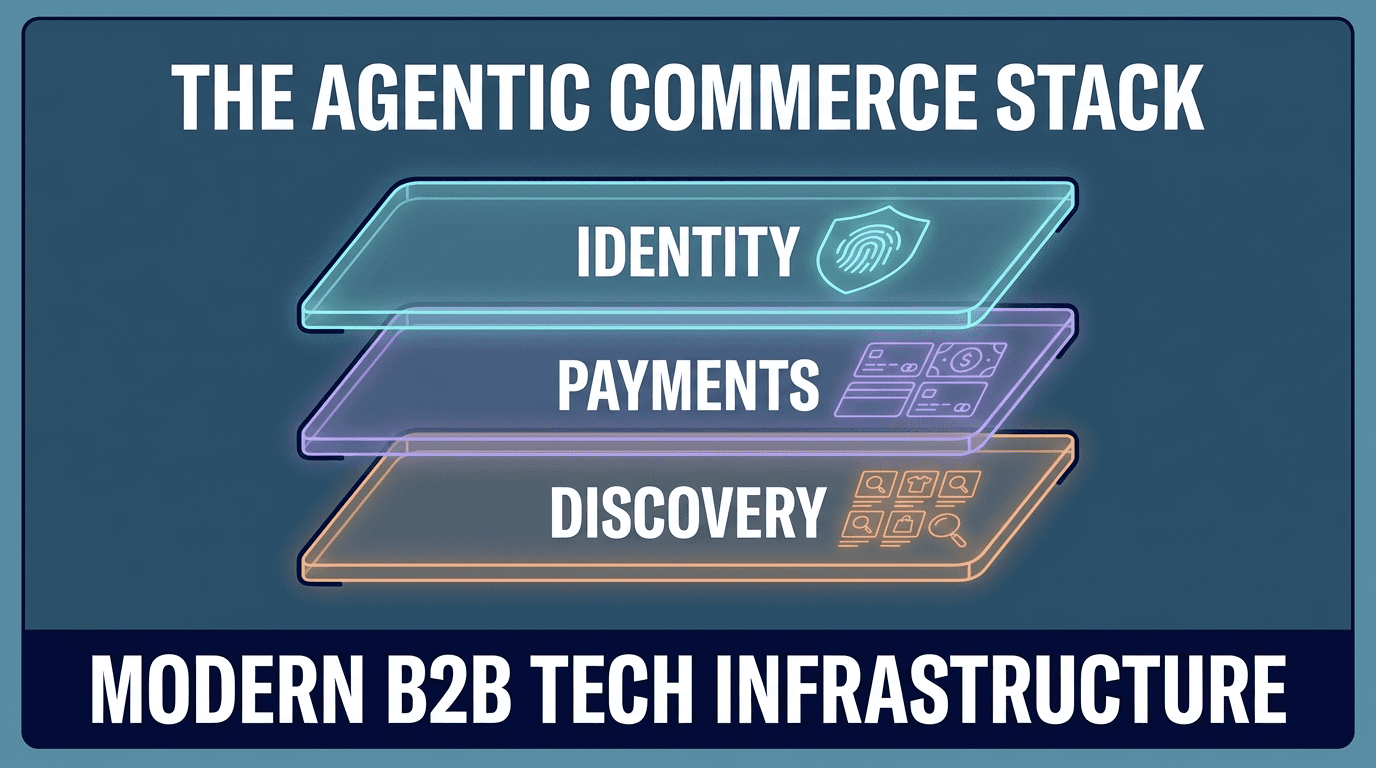
TL;DR: World's AgentKit launch on April 17 adds a proof-of-human identity layer to the agentic commerce stack, joining payments (ACP, UCP, Mastercard Agent Pay, Amex ACE) and discovery as the third pillar. Identity and payments are becoming standardized primitives retailers can consume. Product discovery is the layer merchants still have to own, because it runs on catalog data no protocol can provide.
The trust stack for AI shopping has been assembling in public for six months. Stripe and OpenAI shipped the Agentic Commerce Protocol (ACP primer). Google and Shopify launched the Universal Commerce Protocol (UCP primer). Visa, Mastercard, and American Express announced agentic payment rails in Q1. Now identity gets a standard too. The practical question is no longer "which protocol do I support?" The harder question is which layer you still have to build, and which you can now plug into.
What AgentKit Actually Ships
AgentKit packages three capabilities behind a single SDK, built on World ID's existing proof-of-human primitive. Developers can now verify that an autonomous agent is acting on behalf of a real, unique human before a transaction clears. The Shopify demo routed a World ID signature through UCP to complete a purchase, giving the merchant a cryptographic receipt of human intent.
The three capabilities:
- Agent delegation: a human grants a specific agent permission to act on their behalf
- Human in the loop: high-value decisions (price thresholds, unusual SKUs) pause for confirmation
- Agentic commerce: the verified-human signature travels with the purchase order
According to the World announcement, the partner set is deliberately unbundled. Okta handles enterprise identity. Vercel provides the verifiable-intent runtime. Browserbase supplies agent traffic that passes anti-bot checks. Exa powers search. No single vendor owns the flow. That matters because it mirrors how payments standardized: small, composable primitives that any merchant can adopt without re-platforming.
Map the Stack: Who Owns What in April 2026
The agentic commerce stack as of this week has three layers, and retailers have different degrees of control over each.
| Layer | Purpose | Standards | Who runs it |
|---|---|---|---|
| Identity | Verify the agent represents a real, unique human | World ID AgentKit, Okta, Mastercard Verifiable Intent | Platform providers + IDPs |
| Payments | Move money from the shopper to the merchant | ACP, UCP, Stripe MPP, Mastercard Agent Pay, Amex ACE, Visa Ready | Card networks + PSPs |
| Discovery | Decide which products the agent surfaces to the shopper | Open-ended. Driven by catalog structure, feeds, and schema | Each retailer, individually |
Identity and payments are becoming utilities. A retailer in mid-2026 can pick a payment rail, bolt on an identity SDK, and be "agent-ready" at the transaction layer in a sprint. That is a real step forward, and it is the story most of the trade press will tell this week.
But the transaction only happens if the agent already recommended the product. And that step runs on infrastructure no protocol covers: the structured data inside your catalog. The 900 million weekly users of ChatGPT (DemandSage, 2026) do not see a protocol. They see a shortlist. What puts you on that shortlist is the quality of the product data you syndicate.
Key stat: Forrester confirmed in April 2026 that ChatGPT Instant Checkout was scaled back after only a "handful" of merchants ever went live. The bottleneck was never payments. It was discovery. [Source: Ecommerce Fastlane]
The Discovery Gap No Protocol Fills
Every protocol in the stack assumes the agent has already chosen your product. ACP moves an order. UCP transports a cart. AgentKit signs the buyer. None of them help a ChatGPT shopping query surface your SKU in the first place.
Salesforce's ChatGPT syndication pilot, announced April 13, is the clearest public confirmation of how this works. Salesforce Commerce Cloud CMO Gordon Evans framed it plainly: the platform now pipes merchant catalogs into ChatGPT "so that it makes the merchant's product catalog more discoverable, more accurate and generally delivering better results for the shopper." Crocs and Pacsun are among the "dozens of retailers" enrolled. Note what the pilot is not: it is not checkout. Salesforce is syndicating product data, and the shopper still buys on the merchant's site.
That pattern, discovery via syndication followed by redirect to the retailer, is now the de facto architecture. Shopify does it. commercetools does it. Salesforce does it. The 78 Top 2000 North American retailers that run on Salesforce combined for $192.60B in 2025 web sales, and all of them just got a syndication path. The agent still has to choose which product to rank, which is a question of agentic commerce optimization, not plumbing.
What Retailers Should Do This Quarter
Most of the work on identity and payments is now vendor work. Most of the work on discovery is still internal. Here are the concrete moves worth prioritizing in Q2 2026:
- Audit which agentic layer you actually own. If you run on Shopify, Salesforce, or commercetools, check whether your platform already ships identity and payment primitives. In almost every case, yes. Stop building those in house.
- Count your structured attributes per SKU. Pull your top 20% of products by revenue. For each, count the machine-readable fields beyond title, price, image, and availability. If the count is under 15, you have a discovery problem, not a protocol problem.
- Separate feed jobs from platform sync jobs. Your Google Merchant Center feed is not the same as your agentic feed. Agent-optimized feeds require richer context (use case, attribute hierarchy, comparison anchors) that standard product feeds drop.
- Pick one discovery surface and measure it weekly. Start with ChatGPT or Google AI Mode. Track found rate (how often your brand returns on category queries), product-card rate (how often you get an image plus price plus link vs. a text mention), and average position. This is not available in any standard analytics tool yet. You will need to query it directly.
- Map your top 50 buyer queries into a persona-based test set. Agents rank against shopper intent, not keywords. A "deal hunter looking for a water flosser under $80" returns a different shortlist than "wellness-focused buyer researching the best water flosser." Both queries exist on ChatGPT today. Your catalog either answers both or neither.
Paz.ai, an agentic commerce optimization platform, helps retailers measure and fix the discovery layer specifically. The product monitors how catalogs show up across ChatGPT, Google AI Mode, and Perplexity, enriches structured attributes from a handful to 30-plus, and publishes an agent-ready feed to each discovery surface. It does not handle payments, checkout, or identity. Those are solved by the stack that launched around it.
What AgentKit Signals About the Next Six Months
A pattern is forming. When a layer of the agentic commerce stack matures, the market converges on two or three standards, vendor SDKs wrap the standards, and retailers shift their engineering budget elsewhere. Payments went through this cycle from Q4 2025 to Q1 2026. Identity started the same cycle this month. Discovery has not started it, because discovery is not a protocol. It is a data problem, and the data lives in every retailer's catalog separately.
"Proof of human" is on its way to becoming what TLS is for web checkout: a trust primitive every transaction depends on, bundled behind an SDK, invisible to the merchant. Payment rails are close behind. Catalog quality will not standardize, because it cannot. It is the sum of every retailer's individual decisions about what attributes to capture and how often to refresh the feed.
The merchants that win the next six months will spend their engineering time on the layer they still own. The ones that keep re-solving identity and payments while their catalog stays thin will lose share on every query that isn't about their brand name.
Frequently Asked Questions
What is World ID AgentKit?
AgentKit is a developer toolkit launched April 17, 2026 that lets AI agents carry cryptographic proof that they are acting on behalf of a real, unique human. It ships three capabilities: agent delegation, human-in-the-loop confirmation, and verified-human signatures on purchase orders. Launch partners include Okta, Vercel, Browserbase, and Exa.
Does AgentKit replace payment protocols like ACP or UCP?
No. AgentKit sits above payments as an identity trust layer. A World ID signature travels with a purchase order but the payment still clears through a standard rail such as ACP, UCP, Stripe MPP, or one of the card networks' agentic payment programs.
Is agentic commerce standardizing or fragmenting?
Both, depending on the layer. Identity and payments are consolidating around a handful of standards with vendor SDKs wrapping them. Discovery is still fragmented by retailer, because it runs on catalog data unique to each brand. There are currently ten active agentic commerce protocols with limited interoperability across the stack.
If my platform already supports ChatGPT syndication, am I done?
Syndication gets your catalog in front of the agent. It does not guarantee the agent ranks your products on relevant queries. Ranking depends on structured attribute quality, persona-relevant context in your product copy, and freshness of feeds. Syndication is necessary but not sufficient.
What should I track to measure AI-driven discovery?
At minimum: found rate on category queries, product-card rate (full card vs. text mention), average position, and share of voice against named competitors. None of these are available in GA4 out of the box. They require querying each AI surface directly, either manually or through a monitoring tool.
The Next Layer Is Yours
The agentic commerce stack in April 2026 is easier to read than it was six months ago. Identity has a standard. Payments have several. Discovery still runs on the catalog you ship. The retailers who treat that asymmetry as an opportunity will pull ahead on every non-branded query before ads arrive to compress the window.
If you want to see what your catalog looks like to an AI agent today, run a free AI Readiness Report. Enter any product URL and you will get a four-layer breakdown of how an agent parses your data, scored 0 to 100, in under a minute.
Paz.ai is an agentic commerce optimization platform. It helps retailers monitor how products appear across AI shopping surfaces, enrich catalog data for agent comprehension, and publish agent-ready feeds to ChatGPT and Google AI Mode.
How AI-ready are your products?
Check how ChatGPT, Google AI, and Perplexity evaluate any product page. Free score in 30 seconds.