Use cases / Product data and GMC
Product data and GMC
Paz finds the product details your catalog and feed are missing, checks them against your Merchant Center issues, shopper questions and priorities, drafts the fix from information you already have, and publishes it to your ecommerce platform and Google Merchant Center once you approve.
Output: A fix waiting for approval: current value, corrected value and the reasoning behind it. Published once you approve.
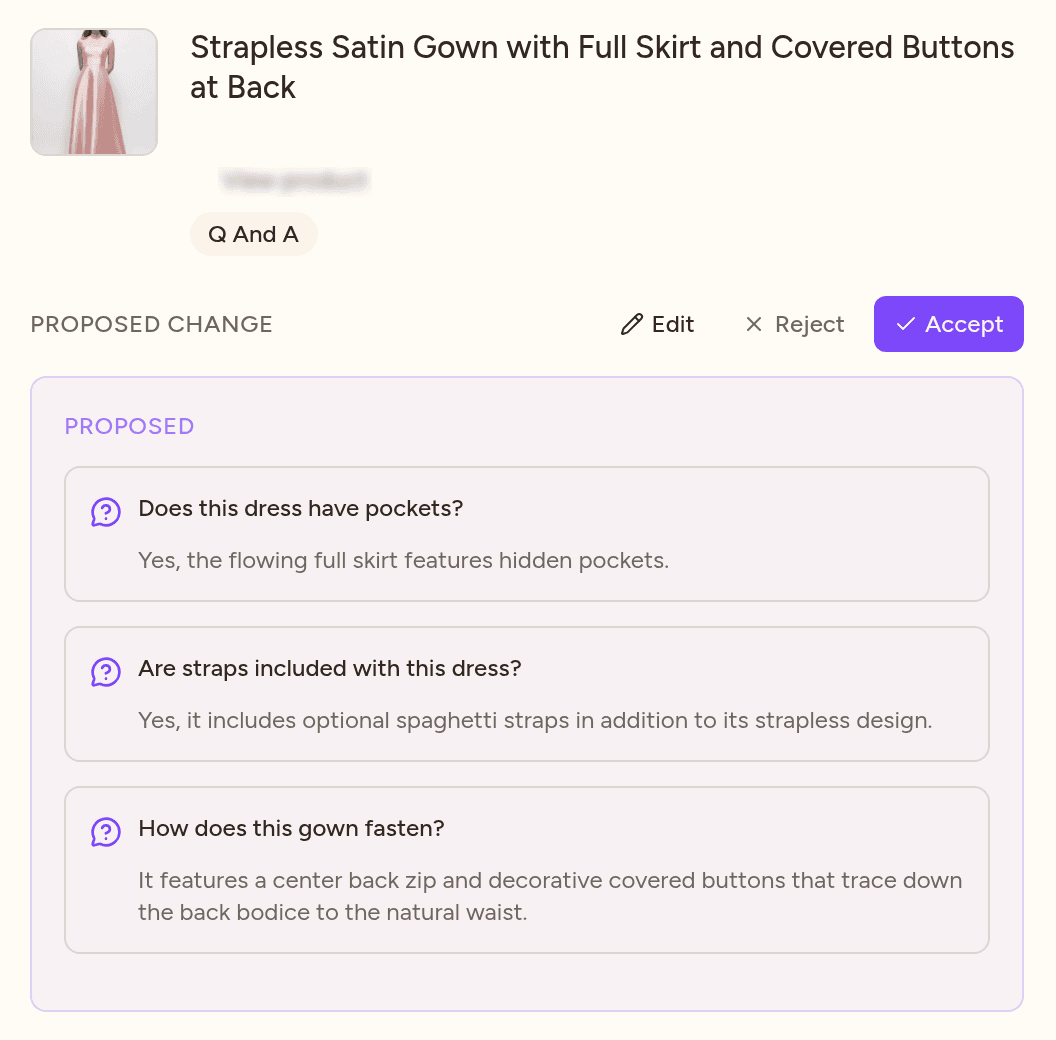
Example: a product description correction
A bottle in your priority collection has a description that leaves out its capacity. The catalog and PDP both say 750 ml and stainless steel. Paz uses those details to draft the correction.
Current description
“Trail bottle for everyday adventures.”
Proposed description
“750 ml stainless steel trail bottle for everyday use.”
Source information: catalog and PDP both list 750 ml and stainless steel.
- Business priority
- This collection first; approved product claims stay as they are.
- Cross-check
- Your ERP lists the bottle in stock and Merchant Center shows no disapproval on it, so the gap is worth fixing now rather than parking.
- Your review
- Check the proposed wording against the catalog information, then approve or edit the change.
- Publishing
- Written to the Shopify product record and the mapped GMC field, then read back to confirm it landed.
- Next check
- The correction and the remaining gaps in the collection, on the next run.
When the catalog and PDP disagree, the fix stops as an exception until your team names the right value.
Common questions
Which product-data issues does Paz find?
Missing or inconsistent attributes such as material, capacity, size and color; descriptions that leave out details your PDP states; and GMC disapprovals or warnings tied to product data.
Where does the fix get published?
To your Shopify product fields or metafields, to Google Merchant Center, or both. Writing to the catalog source means the next feed sync carries the fix instead of reverting it. Other destinations on request.
We already use a feed or PIM tool. How does Paz fit?
Paz writes the fix to the Shopify product record your feed tool reads, so the next sync carries it to your channels instead of reverting it. Where you publish directly to GMC, Paz can write there as well. Where Akeneo or Salsify is the source of truth, Paz drafts the values and hands them to your PIM owner instead of writing to the storefront. Nothing else in your feed setup changes.
What if a fix is wrong?
Nothing is published without your approval. You can edit a proposed value before approving, reject it, or revert a published change. If you want routine fixes to go out without a click, you set that policy per workflow. Rejected changes tell the next run to leave that claim alone.
Test Paz on your store
See how Paz finds an issue, prepares a change and carries it through approval and publishing.
Other workflows: AI visibility · Traffic and performance