What Is Agentic Commerce Optimization (ACO)? The Complete Guide for Retailers
- Author
- By Dor
- Publication date
- Published
- Last updated
- Updated
- Reading time
- 6 min read

Last updated: March 3, 2026
Agentic Commerce Optimization (ACO) is the practice of structuring product data, catalog infrastructure, and commerce APIs so AI shopping agents can discover, recommend, price-compare, and transact on behalf of consumers. Morgan Stanley projects AI agents will capture $385 billion in U.S. e-commerce spending by 2030, yet most retailers remain invisible across ChatGPT, Google AI Mode, and Perplexity because their catalogs lack the structured markup and protocol support (ACP, UCP, MCP) these platforms require.
Where SEO optimized for search engine rankings and clicks, ACO optimizes for agent-readable product feeds, real-time inventory APIs, and multi-protocol connectivity. The shift matters now: ChatGPT processes product queries from over 900 million weekly active users, and Semrush data shows 93% of Google AI Mode searches end without a click to any website. ACO is the discipline that determines whether your products exist in this new zero-click commerce layer.
The retail industry has had roughly twenty years to figure out search engine optimization. The playbook is mature: keywords, backlinks, page speed, structured data. Most serious retailers have it down.
Now that playbook is becoming obsolete. Not because SEO stops working, but because the shopping journey is moving somewhere SEO can't follow.
ChatGPT has 800 million weekly active users. 16% of Americans have already made a purchase based on an AI recommendation. Morgan Stanley projects agentic commerce could reach $385 billion in U.S. spending by 2030. And the shift is accelerating - 53% of ChatGPT's user base is between 18 and 34, the demographic that sets commerce trends for the next decade.
The problem for retailers: most brands are completely invisible in AI shopping results. They've spent years optimizing for Google and have zero presence in the channels that are growing fastest.
How ACO Differs from SEO, AEO, and GEO
Each generation of optimization solved a different problem:
SEO (1990s-present) optimizes for search engine rankings. The user journey: search, click, browse a website, purchase. Success = traffic.
AEO (Answer Engine Optimization, 2010s-present) optimizes for featured snippets and voice search. The user journey: ask a question, get a direct answer, maybe click through. Success = capturing the answer box.
GEO (Generative Engine Optimization, 2023-present) optimizes for AI-generated responses. The user journey: conversational query, AI-generated answer that may mention your brand. Success = being cited in AI responses.
ACO goes further. It optimizes for the entire purchase flow inside AI interfaces. The user journey: conversational shopping query, AI recommends your product, customer buys without leaving the chat. Success = completed transactions through AI agents.
The critical difference: ACO closes the purchase loop. SEO, AEO, and GEO all ultimately try to drive traffic somewhere else. ACO means the sale happens inside the AI experience itself, through protocols like ACP, UCP, and MCP.
What ACO Actually Involves
ACO breaks down into five areas. None of them are optional if you want AI agents to sell your products.
Making Your Catalog AI-Readable
AI agents don't browse product pages the way humans do. They parse structured data, evaluate attribute completeness, and compare products programmatically. A product listing that works fine on your website might be useless to an AI shopping agent.
The gap is usually dramatic. Most retail catalogs have 5-8 attributes per product. AI agents work best with 40-50+. That means adding conversational attributes (not just "purple running shoes" but materials, cushioning type, gait compatibility, insert compatibility, surface type), structured FAQ data per product, and machine-readable size/compatibility information.
Visual content matters too. AI platforms increasingly use computer vision to evaluate products, so image quality, multiple angles, and descriptive alt-text all factor into whether an agent recommends your product.
Implementing Commerce Protocols
Three protocols are shaping how AI agents transact:
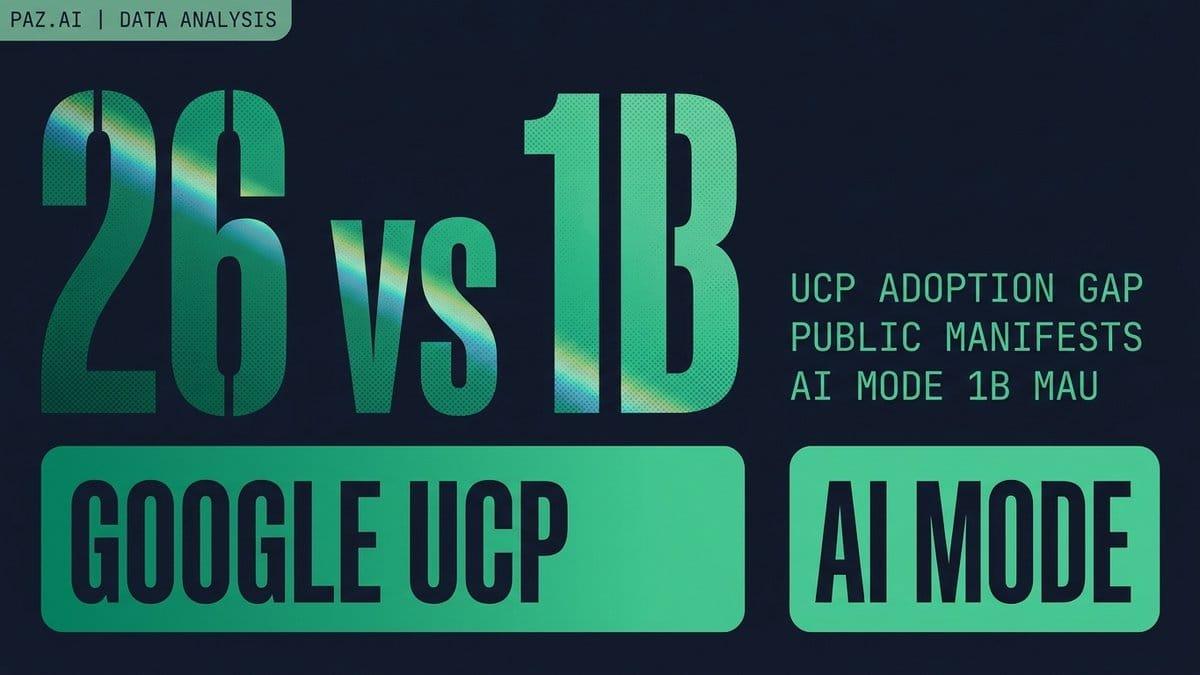
UCP (Universal Commerce Protocol) is Google's standard for enabling purchases inside AI Mode and Gemini. It handles product discovery, cart management, identity linking via OAuth, checkout, and order management. If you sell through Google's ecosystem, UCP readiness is essential.
ACP (Agentic Commerce Protocol) provides broader platform integration for checkout workflows across multiple AI agents. Where UCP is Google-specific, ACP works across platforms.
MCP (Model Context Protocol) enables deeper agent-to-agent communication. This is what powers branded ChatGPT apps with in-chat purchasing and complex multi-step transactions.
Most retailers aren't implementing these yet. The ones who move first will have a significant advantage as AI shopping volume scales.
Monitoring AI Visibility
You can't optimize what you can't measure. Most retailers have no idea whether AI assistants recommend their products, and no way to find out.
AI visibility monitoring tracks how your products appear across ChatGPT, Google AI Mode, Perplexity, and Claude. It answers: Which queries trigger your products? Where do you rank vs. competitors? Which products are being recommended and which are invisible? How does your visibility change over time as you optimize?
This is the starting point for any ACO effort. Before optimizing anything, you need a baseline.
Managing Feeds Across AI Platforms
Each AI platform has different data requirements, feed formats, and integration methods. ChatGPT uses one format. Google AI Mode expects Merchant Center feeds with specific attributes. Perplexity has its own requirements.
Managing these individually is impractical at scale. Feed management for ACO means generating compliant feeds for every platform simultaneously, keeping them synchronized as your catalog changes, and handling the protocol differences (ACP vs. UCP vs. MCP) behind the scenes.
Structured Data and Schema
Schema.org markup remains the foundation for how AI platforms discover and evaluate products. Product schema, offers, ratings, reviews, FAQ, and organization data all influence whether AI agents trust your brand enough to recommend it.
The difference from traditional SEO schema: for ACO, completeness matters more than ever. AI agents cross-reference multiple schema types to build confidence in a recommendation. Missing review data, incomplete shipping details, or absent return policies can push your products below competitors in AI rankings.
Getting Started with ACO
A realistic approach for most retailers:
Month 1-2: Establish your baseline. Connect your catalog to an AI visibility monitoring tool and see where you actually stand. Audit your product data completeness. Check that AI bots can access your site (GPTBot, ClaudeBot, PerplexityBot in robots.txt). Fix any technical blockers.
Month 3-4: Start optimizing. Enrich your product catalog with the attributes AI agents need. Implement or improve Schema.org markup across product pages. Begin generating optimized feeds for the AI platforms where your customers are most active.
Month 5+: Go deeper. Activate commerce protocols (UCP, ACP, MCP) as they become available for your platform. A/B test product descriptions across different AI engines. Build measurement frameworks that track conversation-to-conversion rates, not just traffic.
The key insight: ACO rewards data quality over marketing spend. AI agents don't care about your ad budget. They care about whether your product data is good enough to confidently recommend to a shopper.
Common Questions About ACO
Do I need ACO if I already have strong SEO?
Yes, and they complement each other. SEO captures search traffic. ACO captures the growing segment of shoppers who never touch a search engine. 57% of consumers now use AI for shopping because it saves time. Ignoring that channel means ceding it to competitors.
Which AI platforms should I focus on first?
ChatGPT (68% market share) and Google AI Mode are the two highest-priority platforms for most retailers. Perplexity is growing fast with a more professional/research-oriented user base. Amazon Rufus matters if you sell on Amazon. Start where your customers already are.
How long before I see results?
Initial visibility improvements typically appear within 1-2 months as AI platforms discover enhanced product data. Meaningful conversion increases come around month 3-4 as optimization matures. By month 6, retailers with consistent ACO implementation see significant market share gains in AI channels.
Is this only relevant for large retailers?
ACO actually levels the playing field. Unlike traditional marketplaces where large brands dominate through ad spend, AI agents prioritize product data quality and relevance. A smaller brand with excellent structured data and rich product descriptions can outperform a larger competitor with thin catalog data.
What about customer data and privacy?
One advantage of AI commerce over traditional marketplaces: AI platforms typically pass customer information to merchants rather than keeping it. You maintain the customer relationship, can build loyalty programs, and own the post-purchase experience. Standard privacy compliance (GDPR, CCPA) applies.
The $385 billion agentic commerce market is emerging now. The retailers who will capture it are the ones who recognize that AI agents need different optimization than search engines, and start building for that reality today.
See where your brand stands. Paz.ai gives you an instant AI visibility score across ChatGPT, Google AI Mode, Perplexity, and Claude, so you know exactly where to focus. Book a demo.
How AI-ready are your products?
Check how ChatGPT, Google AI, and Perplexity evaluate any product page. Free score in 30 seconds.