Agentic Commerce Just Left the Building. Most Brands Aren't Ready.
- Author
- By Dor
- Publication date
- Published
- Last updated
- Updated
- Reading time
- 4 min read
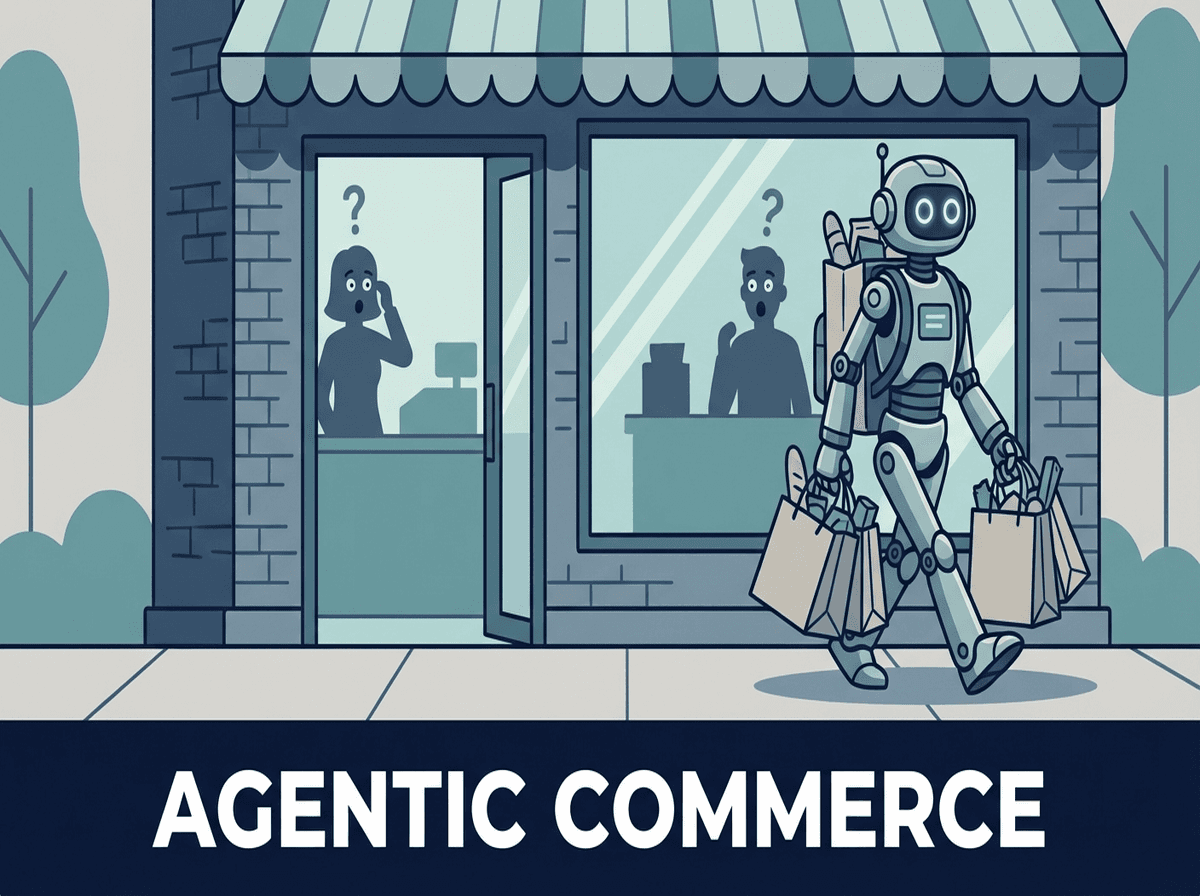
In the span of a single week in February, Google partnered with Shopee to build an agentic shopping prototype across Southeast Asia, OpenAI teamed up with Pine Labs to bring AI-driven transactions to Indian merchants, and Amazon rolled out Alexa+ to every US household with data showing users tripled their shopping activity compared to the original Alexa. If you're still treating agentic commerce as a Silicon Valley thought experiment, you just ran out of time.
The $5 Trillion Land Grab
McKinsey put a number on this last October: agentic commerce could orchestrate $3 to $5 trillion in global retail revenue by 2030, with the US alone accounting for up to $1 trillion. That is not a niche category. That is a fundamental restructuring of how money moves through the economy.
And it is no longer theoretical. The Google-Shopee deal is about building an actual prototype where AI agents can discover products, compare options, and complete transactions on Shopee's platform, which serves over 340 million monthly active users across Southeast Asia, Latin America, and Europe. This is Google saying: we need to own the agentic shopping layer before someone else does.
Meanwhile, OpenAI's play is arguably more significant. Pine Labs processes payments for over 150,000 merchants across India, the Middle East, and Southeast Asia. The partnership makes Pine Labs OpenAI's first payments partner for ChatGPT in India, and they're already prototyping agent-driven payments in the Middle East. OpenAI isn't just building a chatbot that recommends products. They're building the rails for AI agents to actually spend money.
The Trust Problem Nobody Wants to Talk About
Here's the part that should make every ecommerce leader uncomfortable. All of this investment, all of this infrastructure, runs headfirst into a wall that nobody has figured out how to scale past.
A ChannelEngine survey of 4,500 marketplace shoppers found that 58% of consumers have used AI tools to research products. That sounds great. But only 17% feel comfortable actually completing a purchase through AI. That is a 41-point gap between research and transaction. AI has won the top of funnel. It is losing badly at the bottom.
This isn't a minor UX issue that gets fixed with a better prompt. It is a fundamental trust deficit. Consumers will let AI help them browse, compare, and shortlist. But when it comes time to enter a credit card number and click "buy," they want a human-controlled experience they recognize.
The PYMNTS data on Alexa+ tells a more nuanced story. Yes, users tripled their shopping activity. But Amazon had to build years of trust through Prime, through reliable delivery, through frictionless returns before anyone would let an AI agent buy things on their behalf. The infrastructure of trust came first. The agentic layer came second.
The Merchant Readiness Crisis
There's another uncomfortable data point buried in a McKinsey survey from January: 71% of retail merchants say AI merchandising tools have had limited or no impact on their business so far. And 61% say their organizations are only slightly prepared, or not prepared at all, to scale AI across merchandising.
Let that sink in. The same industry that is supposed to be on the receiving end of a $5 trillion transformation mostly says AI hasn't moved the needle yet. And they know they're not ready.
This is the real story. It's not "AI agents are coming for shopping." That headline has been written a hundred times. The real story is that a massive infrastructure gap exists between where the technology is heading and where most brands actually are. Google, OpenAI, and Amazon are building the highways. Most retailers are still paving their driveways.
What Actually Matters Right Now
If you run an ecommerce brand, here's what the last week should tell you:
Product data is your new storefront. When an AI agent evaluates your product, it doesn't care about your homepage hero banner or your brand story video. It reads structured data, reviews, and third-party mentions. As Bloomberg's Andrea Felsted noted, citing McKinsey's Anita Balchandani, AI bots analyze the substance of reviews rather than aggregated star ratings. They want to know if a coat is actually warm, not that it has 4.3 stars.
Trust is the moat. The 58/17 gap isn't going away quickly. Brands that figure out how to make AI-assisted purchasing feel safe will capture disproportionate share. That means transparent pricing, reliable fulfillment, easy returns, and identity verification that doesn't feel like a TSA checkpoint.
Global is now. If your agentic commerce strategy assumes a US-first timeline, you're already behind. Google is building for Southeast Asia. OpenAI is building for India. Pine Labs is prototyping in the Middle East. The first markets to normalize agent-driven purchases may not speak English.
The Bottom Line
McKinsey's $3-5 trillion number is big enough to get attention. But the path from here to there runs through a trust gap that technology alone won't close, a merchant readiness problem that most retailers haven't acknowledged, and a global race where US-centric thinking is a liability.
The companies that win agentic commerce won't just have the best AI. They'll have the best trust infrastructure. And right now, almost nobody is building that.
Related Reading
How AI-ready are your products?
Check how ChatGPT, Google AI, and Perplexity evaluate any product page. Free score in 30 seconds.


